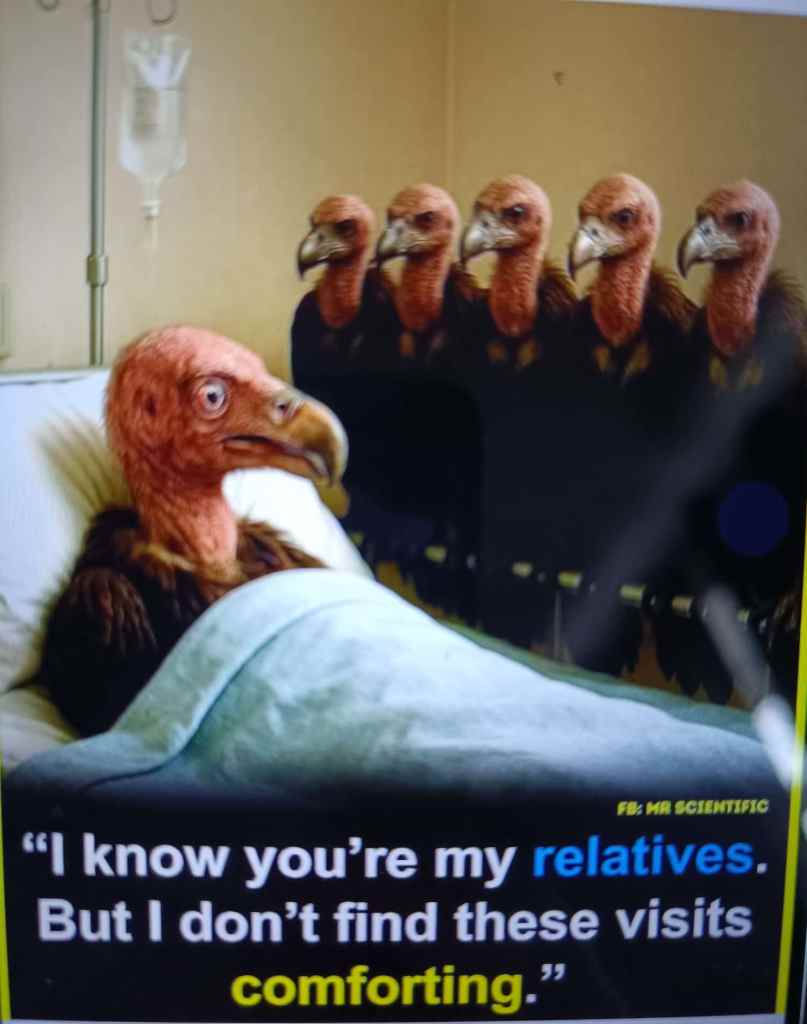
A Reflection on Grace, Fear, and Divine Mercy ❤️

One man once said that if you know little about science, it takes you away from God—but when you advance and truly understand science, it brings you closer to Him. ❤️
That thought has stayed with me over the years, especially when people begin to question whether God exists or not.

For me, I often think about it this way: it is better to live believing there is God and wake up to find none, than to live as though there is no God, only to wake up and meet Him. ❤️
That reflection brings me to a moment in my life—one I can never forget.

Back then in secondary school, JSS1 to be precise, I was living in the hostel at Colliery Comprehensive Secondary School, Enugu-Ngwo. ❤️
I served as the head of the Block Rosary in the hostel, and I even extended it to the police barracks, making sure the children there joined in prayer.

Sometimes, I organized the Stations of the Cross because St Theresa Parish was quite far from the school. ❤️
In many ways, that devotion guided me—it even “saved” me from toasting girls, because everyone simply called me “Brother.” Chai! Ije nwoke. ❤️

But one night, something happened that almost ruined my reputation and nearly exposed me to jungle justice—Uto aka. ❤️

A day student suddenly ran into the hostel late at night. He was distressed, saying his aunty was after his life, accusing him of stealing her money. ❤️
It was already late, and everyone refused to accommodate him. But he pleaded with me, and as a brother, I couldn’t turn him away. ❤️

I begged my classmates on his behalf, and after much persuasion, they agreed, saying, “Yellow, na because of you ooo.” ❤️
Yes—“Yellow” was my nickname back then. In fact, I’m sure many people never even knew my real name before I left the school. ❤️

Since some hostel mates were uncomfortable with him staying inside, I went further to plead with students living outside the hostel. They agreed to let him pass the night there. ❤️

But by morning—Kolombo had disappeared… after stealing the landlord’s pams. ❤️

That was when trouble began.

I was summoned. The landlord was furious and threatened to have me arrested if I did not produce Kolombo. ❤️
I didn’t know what to do. I could have been beaten that morning, but perhaps because they knew me as the “Block Rosary Brother,” they gave me two weeks to find him—or face the consequences. ❤️

That was when I said to myself: ogo m egbunam (my goodwill shall not kill me). ❤️

There was no phone, no way to trace him, and no one knew where he had gone.
I even offered to replace the pams, but the landlord refused. He wanted the culprit. ❤️

So I turned to the only thing I knew—prayer.

For seven nights, I prayed the rosary at midnight, caught between fear and faith. ❤️
Each night, I poured my heart out, trusting God even when I didn’t understand how things would end. ❤️

Then one morning, as I was preparing for class, a classmate ran into the hostel shouting:
“Yellow! Yellow!! Kolombo don show ooo!” ❤️

I dropped my soakie (garri) immediately and followed him—this time filled with a mix of anger and relief. ❤️
When I saw Kolombo, he was casually wearing the very pams he had stolen. ❤️

I held myself back, said nothing harsh, and simply took him straight to the landlord. ❤️

Looking back today, that moment remains one of the many miracles I have witnessed in my lifetime. ❤️
Someone might say it was coincidence—but what a coincidence indeed. ❤️

I have come to believe deeply that God lives in us, and we in Him. ❤️
To search for God only outside ourselves is to risk losing both Him and ourselves. ❤️

During my school days, I had many encounters like this—moments that, upon reflection, convince me that God is ever faithful. ❤️
When we align ourselves and look within, it feels like casting your burdens upon the sun—the shadows simply fall behind you. ❤️

The love and mercy of God are new every morning. ❤️
They do not fail, and they are not dependent on our perfection. ❤️

If you reflect on your own life, you will see moments—clear moments—where God has been faithful to you. ❤️
But do not be deceived: God is not mocked. Whatever you desire, you must work for it—and work with Him. ❤️

Tell me, my friend—when has God shown His faithfulness in your life? ❤️

I remain your friend and brother,
Maazi Onuora Obodoechi ❤️

🌸🌿 Remembering Our Roots in a Changing World 💛🌺

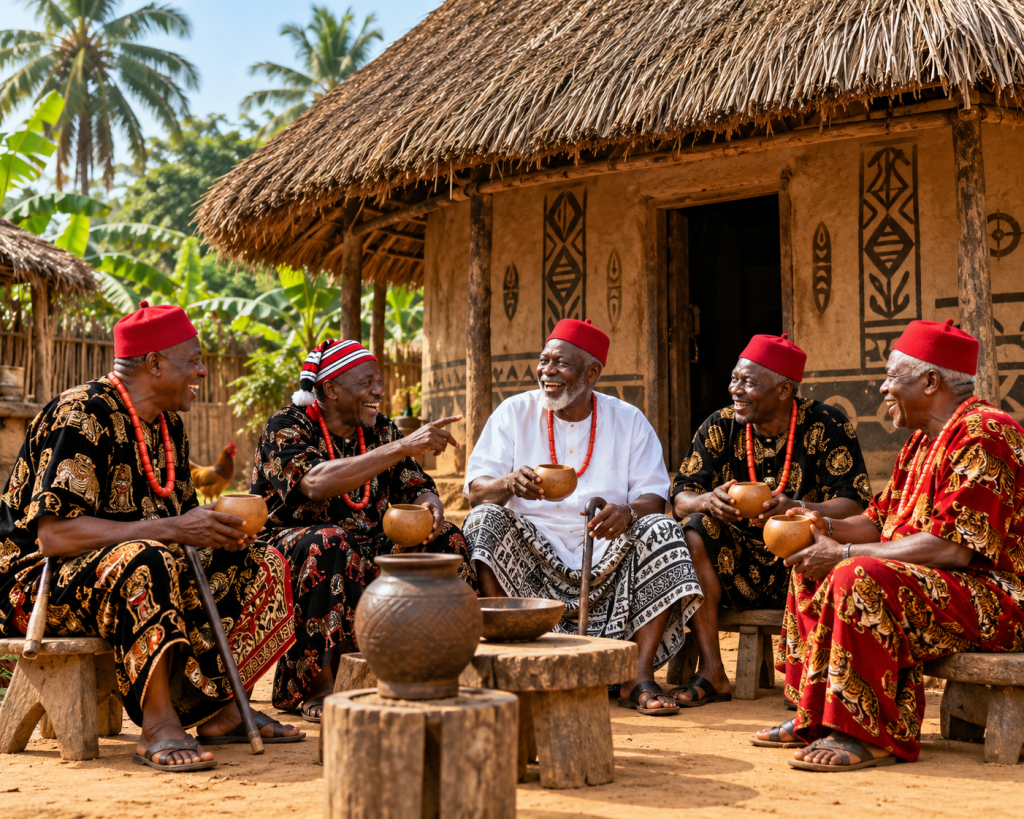
One may often wonder—do traditional beliefs still apply when people find themselves in foreign lands? 🌍💭 In many communities, acts such as adultery, stealing, or taking a life are strictly forbidden. Yet, what happens to those who are natives of a land but are born and raised in distant continents, far removed from their culture and traditions? 🌸

The truth is, somewhere along the way, many parents have allowed their children to lead them, instead of guiding them as they should. 🌿💛 This shift has quietly created a gap—one where knowledge of heritage begins to fade.

There is a story often told—a painful one. A young girl, still in school, lost her life after undergoing an abortion. 🌺 In her homeland, such an act is not only prohibited but considered an abomination. Even in cases where medical intervention becomes necessary, certain rites must be performed after saving the woman’s life, to restore balance and honor tradition. 🌸

It was one hot afternoon when Nwanneka came running into the compound, shouting that an ambulance was approaching. 🚑 But where we come from, the sight of an ambulance does not bring hope—it signals loss. Any vehicle without seats, carrying wooden planks, is what we call an ambulance—a carrier of the dead, not a saver of lives. 🌿

At once, anxiety filled the air. People began asking questions—who had been sick? Could it be an accident? And if so, who? 💭 Within minutes, the piercing sound of a siren echoed: “Wa wa wa wa wow!” Everyone froze, then panic set in. The villagers did not wait for confirmation; cries and wails broke out, rising and falling as they tried to uncover the truth. 🌺

Soon, the devastating news arrived—it was Amuche, Bernard’s first daughter, a young woman who had just graduated from the university. 🌸💔 The grief was overwhelming.

The elders gathered, speaking in hushed but firm tones: “It is not ordinary for such a fresh green leaf to fall. Something—or someone—must have plucked it.” 🌿 They sent two men to Ichie Ogwumagana to uncover the cause of her death.

Ichie Ogwu, as he was fondly known, consulted the Afa. After casting it four times, he shook his head in sorrow. 🌺 He revealed that the young woman had committed an abomination. In their land, terminating a pregnancy is a taboo. Even when done for medical reasons, certain rituals must follow, for the blood of a native cannot be taken lightly or used without appeasing the gods. 🌸

But Mr. Bernard, her father, was a Christian. He did not believe in such traditional practices. In his grief, he rejected the claims, insisting that his daughter had simply fallen ill and met her time. He asked only to mourn her in peace. 💛

Eventually, she was laid to rest, and the traditional rites were performed. 🌿

When I heard this story, I reflected deeply. Whether the dibia was right or wrong, one truth stood clear—everyone must learn the dos and don’ts of their homeland. 🌍🌸 There is an increasing rate of untimely deaths among young men and women, perhaps because of the blending of cultures and the freedom that often comes with exposure. Many begin to live without boundaries. 🌺

To the young girls—ask questions. 🌿💛 Be informed, because certain choices may lead to consequences you may not fully understand. And to the young men as well—be mindful and responsible. 🌸

Distance does not change who you are. 🌍 Your roots remain your roots. Know them, honor them, and live by the principles that guide your people. 🌺 Even in modern medicine, family history remains a vital key to understanding a person fully.

Do not be swept away by the distractions of new cultures and lifestyles. 🌿 Know yourself. Remember where you come from. As our elders say, a rat does not play with a lizard in the rain. 🌧️🐀

With love always, 🌸💛
I remain your friend and brother,
Maazi Onuora Obodoechi

Renaming and the Quiet Forgetting

I have come to believe, more deeply than ever, that we must learn to appreciate what we already have as a people. Like a garden abandoned for distant fields, we have slowly turned away from the flowers that once bloomed in our own soil. And in doing so, we began to forget their fragrance.

Many of the things we accept today were not truly changed in essence—only renamed. And like love misunderstood, once the name changes, the meaning slowly fades.

There was a time when the sight of a rainbow stirred something sacred within us—a reminder of the covenant between God and Noah. It was not just a display of colors, but a quiet promise stretching across the sky like a flower opening after the rain. But today, when we see it, what do we remember?

During the Ekumeku War, before our defeat in 1911, the Anioma people stood strong, fighting with the guidance of the goddess Ekwensu. To us, this was a source of strength, a force of protection. But after the war, that same name was reshaped, redefined, and labeled as evil. Yet we rarely pause to ask—evil to whom? Certainly not to the people it once served, but to those who came as invaders. Like a flower renamed a weed, we began to reject what once gave us life, even praying against it without understanding.

In earlier times, when wrongdoing became widespread, communities turned to sacred oaths—Aru kwu si—binding truths spoken before the land and the ancestors. It was a system rooted in accountability, like tending a garden where every hand knew its responsibility. Today, such practices are dismissed as evil, and in their absence, disorder grows unchecked like thorns overtaking a once-cared-for field.

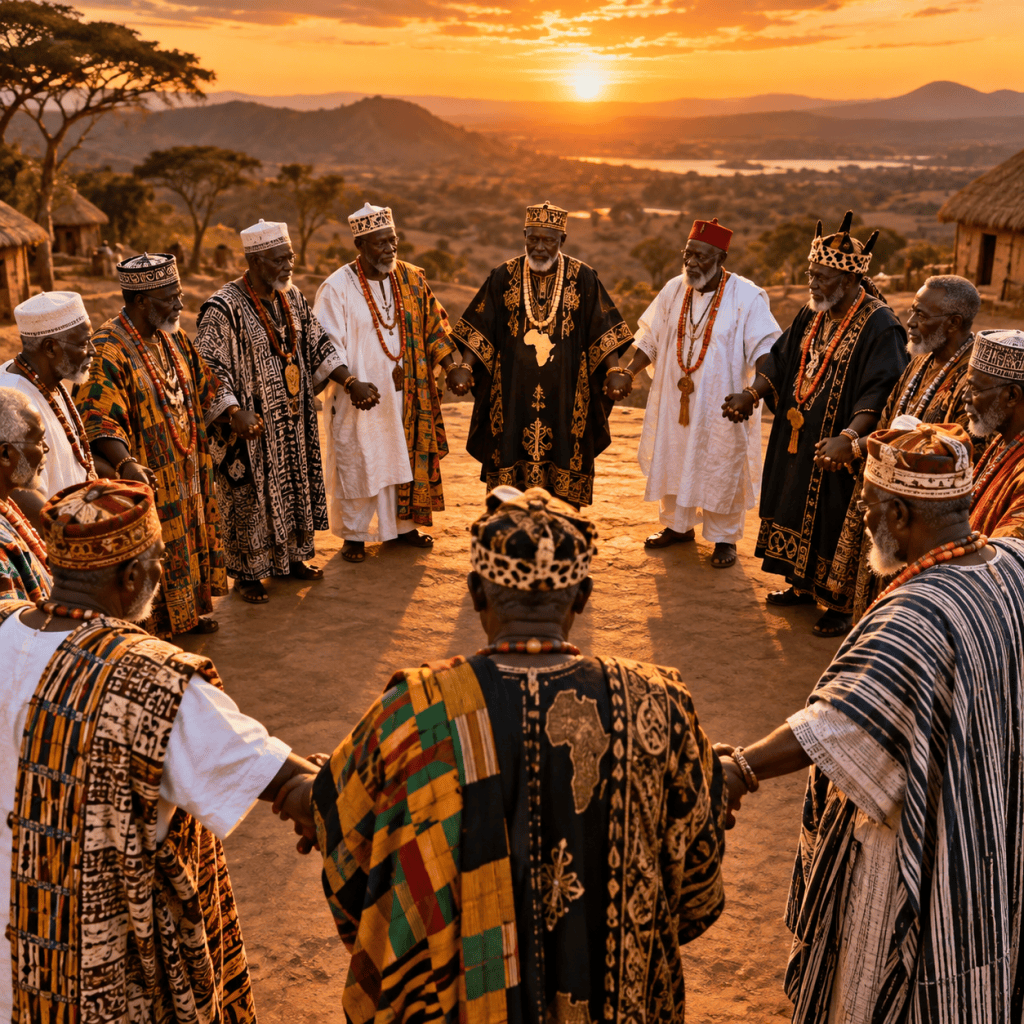
When crises arose, elders gathered—Ichie and Ndi Ozo—men bound by truth, men whose words carried the weight of life itself. To become Ozo was not a matter of wealth, but of sacrifice and honor. A covenant was sealed with blood touching the soil—a sacred connection, like planting a seed with intention, trusting it to grow in truth. Today, these traditions are replaced, often commercialized, or condemned when practiced in their original form.

And so, we find ourselves in a strange place—embracing the ways of outsiders who once misunderstood and redefined us. We see the consequences in our society: the rise of chaos, the loss of accountability, the destruction of shrines, and the longing to seek holiness in distant lands while neglecting the sacredness of our own. Why have we stopped seeing our own land as holy ground, rich with meaning?

My people, instead of uprooting our traditions, why not nurture them? Why not reclaim their true names and meanings, allowing them to bloom again in their rightful form?

I remember stories—like that of a man from my village who, in a time of drought, wept and called forth rain in a distant land. His presence alone was honored, his spirit recognized. Or when invaders threatened our people, the sound of the Ikoro called men to action—men who stood not in fear, but in unity, defending their home like guardians of a sacred garden.

Today, too often, we wait. We watch. We hope for distant help while our roots grow weaker.

The values that once made us strong have not disappeared—they have only been neglected, like flowers left without care. We have embraced cultures we did not fully understand, while turning away from our own, even condemning them. Ironically, what we reject is sometimes studied, practiced, and preserved elsewhere, while we let ours fade.

This is not a call to reject all that is new, but to reflect. To find balance. To merge knowledge wisely, without losing ourselves in the process. Love, after all, is not about abandoning one for another—it is about understanding, honoring, and nurturing what truly belongs.

Let us not sell our identity for a fleeting gain. Let us remember who we are.

May our ancestors guide us, like sunlight returning to a forgotten field, helping us find our way back—so that we may grow again, stronger and wiser.

Isee!!

I remain your friend and brother,
Maazi Onuora Obodoechi

Mmadu ka ana-aya 🌸💖

I often wonder how things like land, houses, water, electricity, and food became commercialised 🌸. In a world where everyone is a citizen, some people enjoy far more than others 💖. You might say some people work harder than others; however, evidence has shown that it’s not simply about hard work alone 🌼.

The narrative of the world has changed over time. Today, one may feel completely grateful just to have a roof over their head after seeing others on the street 🌸. Let me give you a little background so you can better understand my point 💖.

When I was in elementary school around 2002, our school was very far from our village—about four miles away 🌼. We usually trekked to school. Whenever we saw a private car or van, popularly called a “pick-up,” we would beckon them to stop by lifting a thumb up 👍🌸. They would stop and take us to school. Everyone was free and unafraid—there was no fear of kidnapping or ritual harm 💖.

However, around 2006, the sound or sight of a car began to trigger fear in us—the fight-or-flight response—because cases of children being kidnapped and used for rituals had increased over time 🌼.

Another example is from the olden days 🌸. When a man reached the age to marry but had no house, his age group would come together to help him build one 💖. Every age group practised communal support in the spirit of brotherhood 🌼. Wives plaited each other’s hair, and children ate from any mother’s pot that was ready 🌸.

A brother could show land to another brother and ask him to farm. Though there were possessions and boundaries, brotherhood and humanity remained paramount 💖.

I believe you now have an idea of what I am saying 🌼. Governments tax citizens, yet often fail to uphold their own end of the bargain 🌸. Everything now revolves around gain, money, and self-interest, and people barely care for one another 💖.

If you take time to compare humans with other creatures, you may realise that we are often the source of the world’s problems 🌼. Why can’t we decide to live in peace without trying to control one another? 🌸

The problem in the world today is largely about control 💖. Some groups, having acquired others’ belongings—either systematically or by force—seek to ensure that everyone bows to their command 🌼.

Worse still, many people are not paying attention 🌸. As Marcus Aurelius once said, keeping silent during important matters is also a form of injustice 💖.

I am not advocating physical confrontation 🌼, because those in control already have systems in place. Even innovations meant to help humanity are often commercialised for profit 🌸.

However, it is time we begin to care for the living 💖. It is time we start healing this world from the captivity it has found itself in 🌼. It is heartbreaking that so many people will go through life without ever truly knowing what it means to live happily or enjoy life 🌸.

Look at what is happening in the northern part of Nigeria 💖. What kind of lives will those children—who have lost their parents, livelihoods, and communities in a single day—grow into? Yet they have governments and people who are supposed to be looking out for them 🌼.

This is what I implore everyone to do, no matter where you are in the world 🌸: look out for one another, become part of the solution, and stand up against injustice—no matter how small it may seem 💖.

This world is ours—let’s make it a better place 🌼. Humanity first; create value, and money will follow 🌸.

I remain your friend and brother,
Maazi Onuora Obodoechi 💖

🌸❤️ Reflections on Parenthood, Purpose, and Partnership ❤️🌸

🌸 Humans, in many ways, are among the most vulnerable of all living beings. Yet, despite the remarkable progress we have made in medicine and childbirth, it seems that as advancement increases, so too does fear—especially around pregnancy and motherhood. ❤️

🌸 Today, there are countless options when it comes to conception and childbirth. However, there is also a subtle and concerning shift in mindset that is gradually emerging among some women. It is not merely about choices, but about the intentions and beliefs shaping those choices. ❤️

🌸 Across nature, most living creatures embrace the processes of bearing and raising their young instinctively. Even domestic animals, with minimal intervention, carry out these roles. Yet, as humans, we sometimes find ourselves overwhelmed, conflicted, or resistant. This raises an important question: is the challenge truly the process, or the perception we have formed around it? ❤️

🌸 Recently, I encountered a perspective that gave me pause. During a conversation with a friend, she shared her intention to conceive through artificial insemination, expressing that she did not want to bear a child for any “undeserving man.” When asked how she would address questions about the child’s father, she replied that she would simply say he was dead.

🌸 This moment was both surprising and thought-provoking. Beneath the words lay deeper concerns—feelings about appreciation, partnership, and the value of what women go through during pregnancy. Yet, it also revealed how easily decisions can become shaped by hurt, frustration, or generalized assumptions. ❤️

🌸 In another instance, I came across a video of a woman confidently stating that she needed no man in her life, as she was financially capable of raising her children alone. While independence is admirable, it is worth reflecting on the broader picture—particularly the emotional and psychological needs of a child. ❤️

🌸 Every child, in their own way, seeks identity, belonging, and connection. To knowingly deny them the opportunity to fully understand their origins may have lasting effects. Parenthood, after all, is not only about provision but also about presence, guidance, and emotional grounding. ❤️

🌸 Motherhood, like fatherhood, is more than a biological event—it is a lifelong journey of growth, responsibility, and intentional nurturing. It calls for readiness not only in body but in heart, mind, and character. ❤️

🌸 In today’s world, many conversations are filtered through the lens of gender, often creating division rather than understanding. Yet, perhaps the deeper need is not competition, but cooperation—recognizing that both men and women have vital roles to play in building families and shaping future generations. ❤️

🌸 As the saying goes, we often live with the consequences of the choices we make. With that in mind, here are a few reflections to consider: ❤️

🌸 1. Embrace Purpose in Motherhood
Pregnancy is not merely a task—it is a profound responsibility and privilege. When approached with love, purpose, and a sense of divine meaning, it creates a nurturing environment for both mother and child. Choosing to see it as a journey of growth can transform fear into fulfillment. ❤️

🌸 2. Choose Partnership with Intention
Rather than building walls from past disappointments, there is value in carefully and thoughtfully choosing a partner. A loving, supportive home does not happen by chance—it is built through shared values, patience, and intentional effort. ❤️

🌸 3. Prioritize the Child’s Well-being
Children deserve the opportunity to experience the presence and influence of both parents whenever possible. While life may not always be perfect, decisions should be guided by what best supports the child’s emotional and psychological development. Healing personal wounds—through reflection or even professional support—can make a lasting difference for the next generation. ❤️

🌸 Ultimately, motherhood and fatherhood are not titles to claim, but responsibilities to live out. They require sacrifice, understanding, patience, and continuous growth. It is not an easy path, but it is a meaningful one. ❤️

🌸 As time moves forward, let us remember the importance of raising children with strong values—values they not only hear but witness through the lives of their parents. ❤️

🌸 Men, cherish and support your women. Women, respect and uplift your men. In the end, we are all connected, and the strength of one reflects in the well-being of all. ❤️

🌸 With thoughtful reflection and goodwill,
I remain your friend and brother,
Maazi Onuora Obodoechi ❤️🌸

“Are We Still Human? 🌸💛”

It is either we have lost the ingredients that make us human, or we are raising generations in ignorance 🌸💔

Today, I watched a clip from an accident scene. People gathered, shouting: “o kwa new okada,” “hey!! onye nkea anwugo oo!,” “Oh! negodu onye nkea, o ka na eku ume.”
All these exclamations were nothing more than passing comments from bystanders surrounding victims of a motorcycle accident 🌼

Phones were out. Cameras were rolling. But no one was truly helping—not even those who were still breathing 💔🌺

There was no proper crowd control. Of course, no ambulance. No police. Just a sea of onlookers recording, yet no one seemed to have even the slightest idea how to assist the struggling victims of that tragic mishap 🌸

That scene exposed something deeper—the level of ignorance that exists among our people when it comes to first aid and basic life support. It also highlights how poor our road safety awareness is, and how content creation focuses on everything else but rarely on health and safety education 🌼💛

It raises serious questions:
How do people even obtain driving licences in Nigeria?
How does the Federal Road Safety Corps create awareness about road signs, enforce them, and hold defaulters accountable? 🌺

Indeed, we are in serious trouble 💔
People are dying every day. According to WHO records, about 36,000 deaths result from road traffic accidents in Nigeria, placing us among the highest in the world. That is about 33.7 deaths per 100,000 people annually 🌸

The painful truth is this—we have become used to it 🌼
While poor road safety awareness contributes greatly to these accidents, drug misuse and abuse also play a significant role.

There is little or no system to properly check drivers or the condition of vehicles. Even more troubling is that in many motor parks, alcohol is openly sold to drivers—and passengers see it as normal 💔🌺

Imagine placing your life in the hands of a drunk driver and still praying for journey mercies 🌸

There is so much to say about how we have gradually devalued human life, allowing people who care less about us to represent us in governance.
We now reject what is good because we have lived so long with the worst that it feels normal 🌼

We record people fighting for their lives just to gain cheap comments and likes instead of helping them 💔
Road safety officials are blamed for enforcing the law.
Drivers obey a madman with a stick faster than they obey traffic lights 🌺

How can we begin to solve these problems? 🌸

First, equip yourself with knowledge of first aid, basic life support, and safety precautions 🌼
In cases of fire outbreaks or accidents, follow evacuation procedures—save your life first. Leave belongings behind 💛
When fuel tankers fall, run far away from the scene. Call the fire service (know the number in your area and save it). Do not scoop fuel—one small spark can cost you your life 💔
Obey traffic rules. Do not travel with a driver who drinks alcohol. Speak up. Protest if you must. Encourage other passengers to do the same. Gather evidence and report offenders 🌺

Finally, life is precious 🌸
Never find joy in watching another person lose theirs. Read. Learn. Get involved. Even in governance—be part of the change we desperately need 🌼💛

Enough of these deaths. Enough of losing innocent lives 💔
If you believe we deserve better as a people, comment YES 🌺

I remain your friend and brother,
Maazi Onuora Obodoechi

🌿 The Tree Message: Grow Deep, Bloom Strong 🌸❤️

People often admire the outward success and quality of life others display, yet pay little or no attention to the underground work done silently to achieve it. 🌸❤️

The truth remains: whether success is genuine or not, there is always a price to pay. The real question is—how rooted is your effort toward the goal you seek? Those who make quick money or gain wealth hastily may enjoy momentary success, especially if they lack financial discipline or principles. Either way, work is still required. 🌿

This is why I want us to reflect on the tree formula. A tree is both phototropic and gravitropic—it grows toward the sun and also downward into the soil at the same time. 🌸 When a seed is planted in dark soil, it must die to its old self. With a tiny root and stem, its journey begins. The quality of that tree’s life depends on how deep its roots go. While it eventually displays beautiful flowers above the surface, the real work of growth and stability happens unseen. ❤️

Here is something powerful:
Deep in the soil, there is no noise or opinions from other trees. Down there, it doesn’t worry about who approves or disapproves of its growth. Its focus is simple—to grow and bear fruit for the benefit of the owner, itself, and others. It is committed to fulfilling its destiny. 🌿❤️

How does this apply to you? 🌸

When God plants an idea in your mind, or you set out to achieve something, remember the tree message:

  1. Work and prepare yourself in silence. Trust and believe in yourself while you are still in your development stage. The fish that keeps its mouth closed avoids the hook. 🌿❤️
  2. Surround yourself with the right people—those who feed the king in you. Some will remind you of your shortcomings or discourage your dreams. But remember, in the soil it was just the seed and its belief, alongside the planter’s vision. Even one wrong voice can destroy a vision, so be vigilant. 🌸
  3. Learn to succeed alone when necessary, and deepen your roots in solid values and principles. Prioritise quality over quantity, and cultivate the habit of waiting with purpose. Do not rush to impress—move with intention and never lose sight of your goal. ❤️🌿

Furthermore, there is another plant that teaches us—odaa Opuo (it grows wherever the leaf falls, hence its name). 🌸
This plant grows almost anywhere and carries powerful medicinal value. There is hardly any illness where it is not a key ingredient in preparation, yet it remains common and unnoticed. ❤️

What point am I making? 🌿

Those who dress expensively often seek attention, but those who are truly valuable are recognised by people of value. They may appear simple, yet true worth is often hidden in ordinary things—if you look closely. Air feels common until breathing becomes difficult—then you realise how priceless it is. You understand now, abi? 🌸❤️

Therefore, carry a big stick with a gentle voice. Be simple, yet possess values that are priceless. True wealth is not in looking rich, but in being rich—in character, wisdom, and substance. 🌿❤️

In conclusion 🌸

Nature constantly teaches us simple but profound life lessons, revealing the greatness of the Creator. Yet, many are busy trying to impress others, forgetting that most people are not truly concerned about us.

From these lessons:
First, before you present yourself to the world, ensure your roots are deep—and keep deepening them. Even as you grow and become visible, never stop adding value to yourself. 🌿

Second, remember that the most important opinion is the one you have of yourself. Like the odaa opuoo leave, strive to remain true to who you are in all circumstances, holding on to your values and growing against all odds. ❤️

Be a tree that bears fruit for yourself and others. Guard your mind diligently and value your uniqueness. As an Italian proverb says, “the rotten fish begins to stink at the head.” 🌸

I remain your friend and brother,
Maazi Onuora Obodoechi ❤️🌿

🫀 What Is Cholesterol? A Complete Guide to Lipids, Risk, and Heart Disease

Cholesterol often gets labelled as “good” or “bad,” but the reality is far more nuanced—and far more important.

Understanding cholesterol isn’t just academic. It’s central to preventing heart attacks, strokes, and long-term cardiovascular disease.


🧬 What Is Cholesterol?

Cholesterol is a waxy, fat-like molecule (a sterol) that your body both:

  • Produces in the liver (endogenous)
  • Obtains from food (exogenous)

Despite its bad reputation, cholesterol is essential. It serves as:

  • The structural backbone of every cell membrane
  • A precursor to steroid hormones (cortisol, oestrogen, testosterone)
  • A building block for bile acids (fat digestion)
  • A precursor to vitamin D

Because cholesterol is hydrophobic (water-insoluble), it cannot travel freely in blood. Instead, it’s packaged into lipoproteins—specialised transport particles made of fats and proteins.


🚚 The Four Major Lipoproteins

Think of lipoproteins as delivery vehicles carrying cholesterol through the bloodstream.

🔴 LDL — Low-Density Lipoprotein (“Bad Cholesterol”)

  • Transports cholesterol from the liver to tissues
  • Excess levels lead to arterial plaque formation
  • Causally linked to atherosclerosis

👉 The higher your LDL over time, the greater your cardiovascular risk.


🔵 HDL — High-Density Lipoprotein (“Good Cholesterol”)

  • Removes excess cholesterol from tissues
  • Returns it to the liver for disposal (reverse cholesterol transport)

⚠️ Important nuance:
While high HDL is associated with lower risk, raising HDL with drugs does not necessarily reduce heart disease.


🟡 VLDL — Very Low-Density Lipoprotein

  • Produced by the liver
  • Transports triglycerides to tissues
  • Eventually becomes LDL in circulation

⚫ Triglycerides (TG)

  • The body’s main fat storage molecule
  • Elevated levels:
    • Increase pancreatitis risk (>500 mg/dL)
    • Signal metabolic dysfunction (e.g. insulin resistance)

📊 Cholesterol Levels: What’s Normal?

Cholesterol is measured using a lipid panel (fasting or non-fasting in most cases).

Key Reference Values (mg/dL)

MeasurementCategoryValue
Total CholesterolDesirable< 200
LDLOptimal< 100
LDLVery High≥ 190
HDLLow (risk)< 40 (M), < 50 (F)
HDLProtective≥ 60
TriglyceridesNormal< 150
TriglyceridesVery High≥ 500

💡 Key Insight:
Treatment decisions are based on overall cardiovascular risk, not just cholesterol numbers.

  • High-risk patients often target:
    • LDL < 70 mg/dL
    • Or even < 55 mg/dL in very high-risk cases

⚠️ How High LDL Damages Arteries

The link between cholesterol and heart disease lies in atherosclerosis—a slow, progressive disease of the arteries.

The Atherosclerosis Cascade

  1. Endothelial Dysfunction
    Damage from hypertension, smoking, or diabetes allows LDL to enter artery walls.
  2. LDL Oxidation
    LDL becomes oxidised (ox-LDL), triggering inflammation.
  3. Foam Cell Formation
    Immune cells engulf ox-LDL → forming foam cells (early plaque).
  4. Plaque Formation
    Smooth muscle cells form a fibrous cap over a lipid core.
  5. Plaque Rupture
    The cap breaks → blood clot forms → heart attack or stroke

💡 Critical Insight:
Most heart attacks occur from unstable plaques that weren’t severely blocking the artery.


❤️‍🔥 Why It Matters: Cardiovascular Complications

Untreated high cholesterol contributes to:

  • Coronary artery disease (CAD) → angina, heart attacks
  • Ischaemic stroke → brain injury, disability
  • Peripheral artery disease (PAD) → limb pain, amputation risk
  • Heart failure → chronic heart damage
  • Aortic stenosis → valve calcification
  • Sudden cardiac death

⚖️ Risk Factors for High Cholesterol

🧩 Modifiable Factors

  • Diet high in saturated/trans fats
  • Physical inactivity
  • Obesity (especially abdominal fat)
  • Type 2 diabetes
  • Hypothyroidism
  • Excess alcohol
  • Certain medications

🧬 Non-Modifiable Factors

  • Familial hypercholesterolaemia (FH)
  • Age (↑ risk after 45 men / 55 women)
  • Male sex (pre-menopause)
  • Family history of early heart disease
  • Ethnicity (e.g. higher risk in South Asians)

⚠️ Special Case: Familial Hypercholesterolaemia (FH)

  • A genetic disorder (~1 in 250 people)
  • Causes extremely high LDL from birth (190–400 mg/dL)
  • Leads to early heart disease

👉 Requires:

  • Early diagnosis
  • Aggressive treatment
  • Family screening

🩺 How to Lower Cholesterol

Treatment depends on your overall cardiovascular risk, not just your LDL level.


🥗 1. Lifestyle Changes (First-Line for Everyone)

These can reduce LDL by 10–30%:

  • Diet: Reduce saturated fats, increase fibre (oats, legumes)
  • Exercise: 150 min/week → improves HDL & triglycerides
  • Weight loss: Even 5–10% has major impact
  • Stop smoking: Improves HDL and reduces risk rapidly
  • Limit alcohol: Especially important for triglycerides

💊 2. Medications

Used when lifestyle changes aren’t enough or risk is high:

  • Statins
    ↓ cholesterol production → lower LDL by 30–60%
    👉 First-line therapy
  • Ezetimibe
    ↓ cholesterol absorption → additional ~15–20% reduction
  • PCSK9 inhibitors
    ↑ LDL receptor activity → reduce LDL by ~50–60%
    👉 Used in high-risk or resistant cases

📈 3. Monitoring

  • Regular lipid panels
  • Adjust treatment based on risk + response
  • Manage underlying conditions (diabetes, thyroid disease)

🧠 Key Takeaways

  • Cholesterol is essential—but excess LDL is harmful
  • LDL is a causal driver of atherosclerosis
  • HDL is helpful, but not a treatment target
  • Risk depends on lifetime exposure, not just a single value
  • Lifestyle changes are powerful—and always required
  • Medications (especially statins) save lives
  • Genetic conditions like FH require early, aggressive treatment.

Health is wealth..

I remain your friend and brother,

Maazi Onuora Obodoechi

“Where Love Once Bloomed 🌹”

My heart wears pain 🌹,
and from the clouded sky of my eyes pours rain 💧,
not of regret, but of love lost—and longed for again 💔.

At last, hope screamed upon my lips 💖,
as beautiful moments bloomed—once only a dream 🌸.
Laughter arrived, along with companionship and teamship 🤍,
yet faded just as quickly as it came 🍃.

Over time, hearts once fond grew distant 🌷,
replaced by jealousy, suspicion, and mistrust—
wounds born from shadows of the past 🌑.

But how can the past still guide your steps? 🌹
I carry the weight of pain kept quiet within,
while wishing only for your healing and success 💫.

You stood watching, unsure to move forward,
though my reassurances came like daily blossoms 🌼—
still, they were never enough.

In the end, the past took hold of your trust again,
while I learned to let it go 🌿.
I truly hope you find your peace 💐.

But I cannot heal you,
if you won’t take my outstretched hand 🤲💖

I remain your friend and brother,

Maazi Onuora Obodoechi.
Is this your new site? Log in to activate admin features and dismiss this message
Log In